

A custom-built stage for every occasion

The BIG stage
Dragoncillo’s largest shadow puppet stage, developed and maintained by Jason Yancey, uses a projection screen (8’2” tall and 9’6” wide) that is set up for video and sound, and requires a single power outlet for electricity. The equipment is self-contained, travels entirely in a couple of suitcases, and adapts readily to available spaces.

Modern technology for telling stories with shadows
The foundation for each show is a film or series of images that we rear-project onto a nylon screen supported by pipe and drape masking. As it plays the film not only supplies the backlight for the shadow puppet show, it allows for detailed background images that change themselves automatically throughout the performance, as well as built-in music and sound effects to accompany the action.

Ready-made performance
Immediately below the scene, in a portion of the projection visible only to the puppeteers, the film displays two columns of scrolling dialogue and stage directions. This feature removes the need for memorization without a reliance on “canned” or recorded dialogue. The performers simply follow along with the film, manipulating the puppet in the light, while reading their lines off the screen. In this way Dragoncillo shows maintain high production values but require very little time to rehearse.
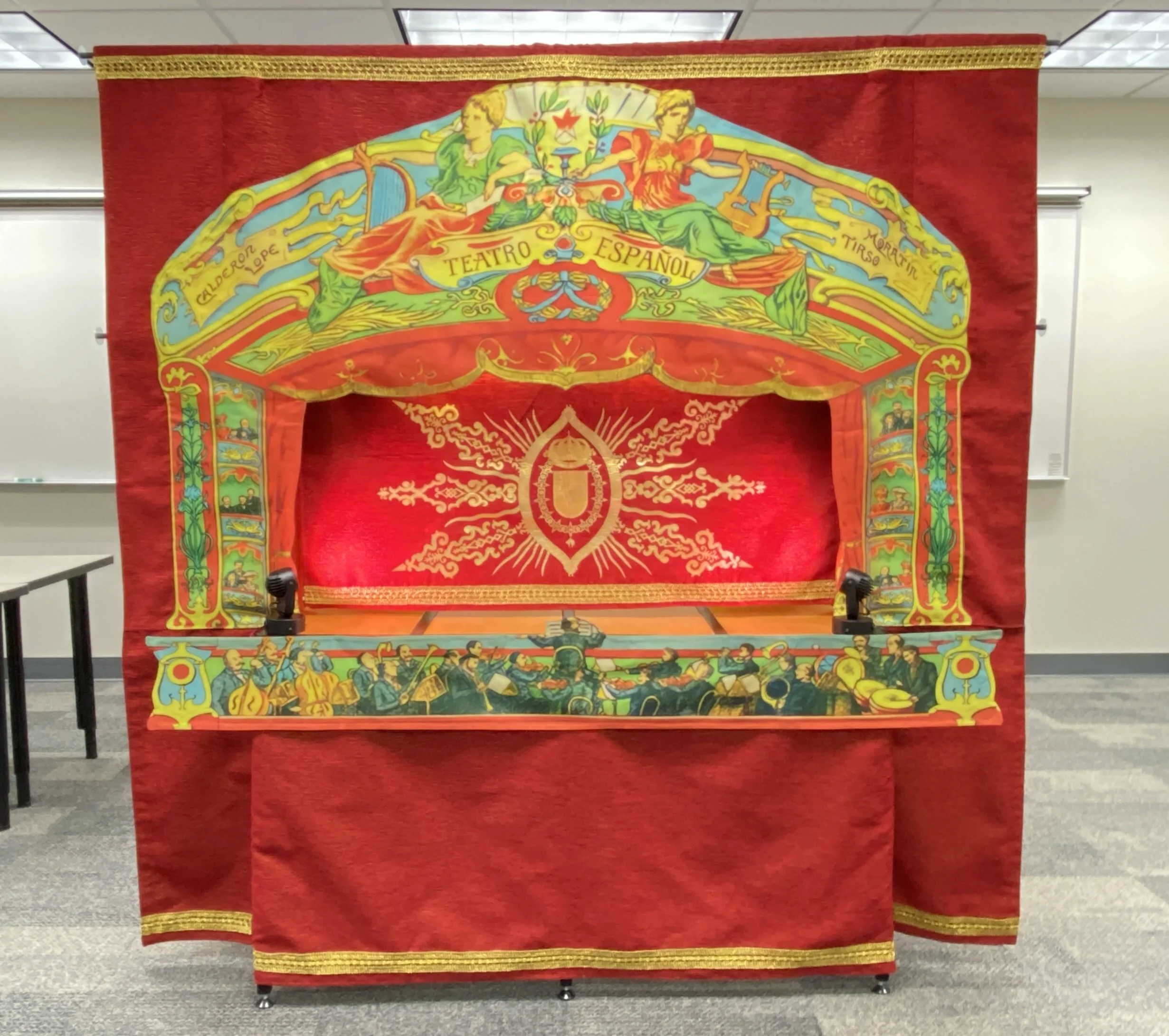
The MIDDLE stage: TEATRO ESPAÑOL
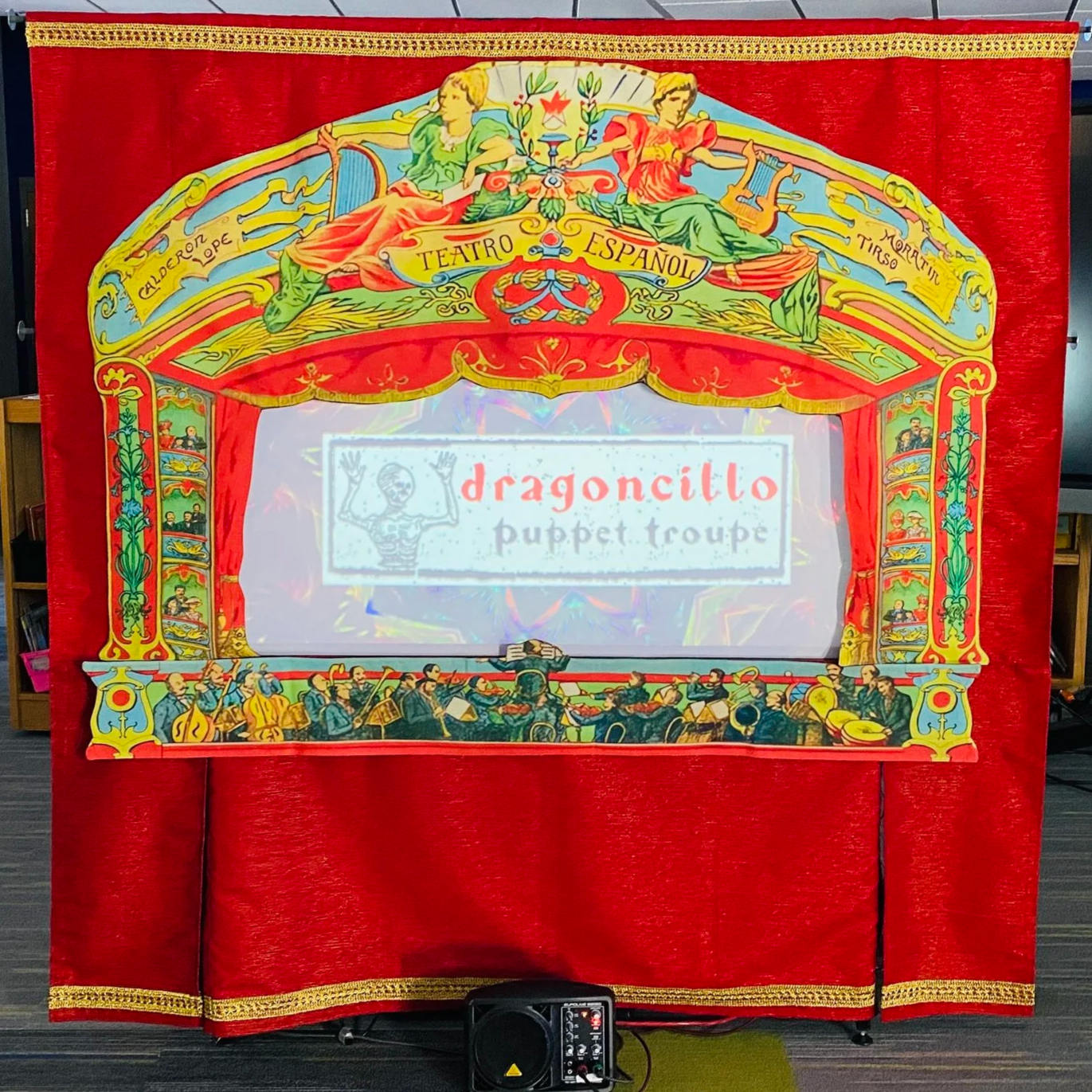
Sporting a custom-designed, modular frame, and inspired by a Spanish “toy theater” design from the early 1900’s, this dynamic stage is beautiful, portable, and adaptable for intimate shows using shadow, rod, and marionette puppets.
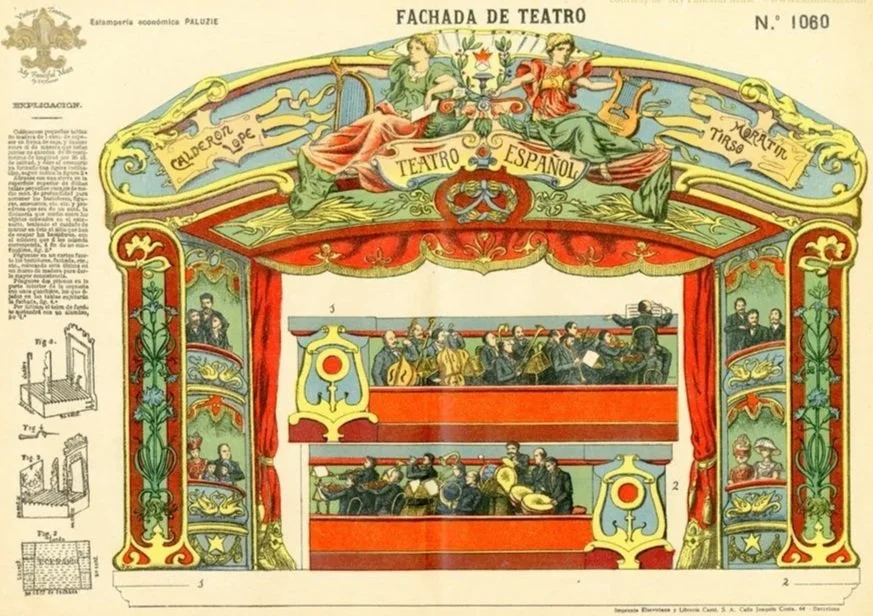
Toy Theaters of the Nineteenth Century
A popular keepsake in the 19th century, “toy theaters” were paper models of stages made at home by cutting out scenery and characters from a card stock kit and then glueing and arranging the various pieces to create a miniature version of the theater for play at home. The practice was especially popular in England, France, and Spain, and often captured the look of actual playhouses and their performances. Dragoncillo’s Teatro Español is based on model number 1060, created by Paluzie—a prolific publisher of toy theaters based in Barcelona.
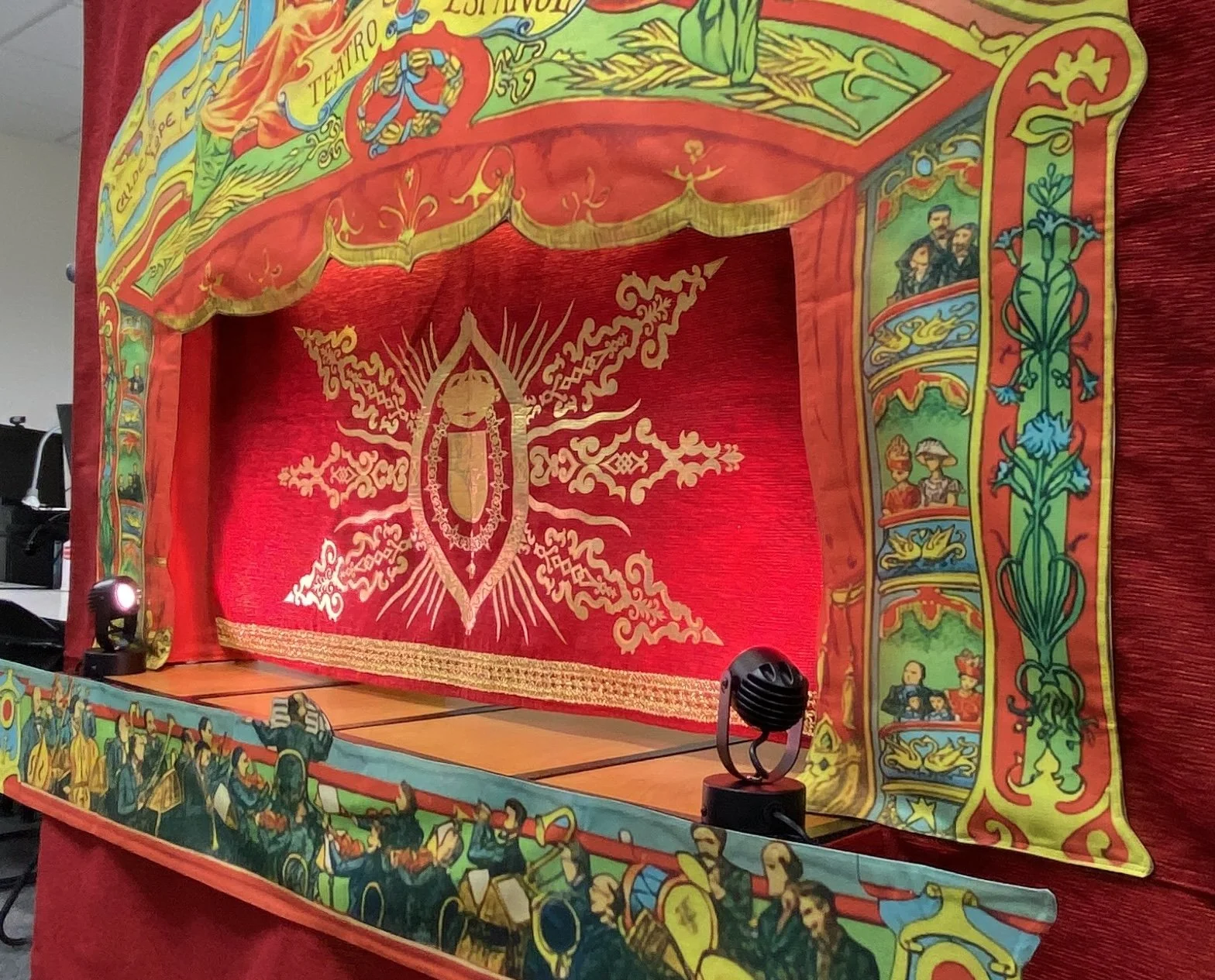
Grand Roll-up Curtain
The design of our front curtain takes inspiration from the historic and beautifully elaborate tapestry featured in the actual Teatro Español in Madrid. With the pull of a cord, the curtain raises and lowers to provide the puppet show with a properly grand entrance and exit!
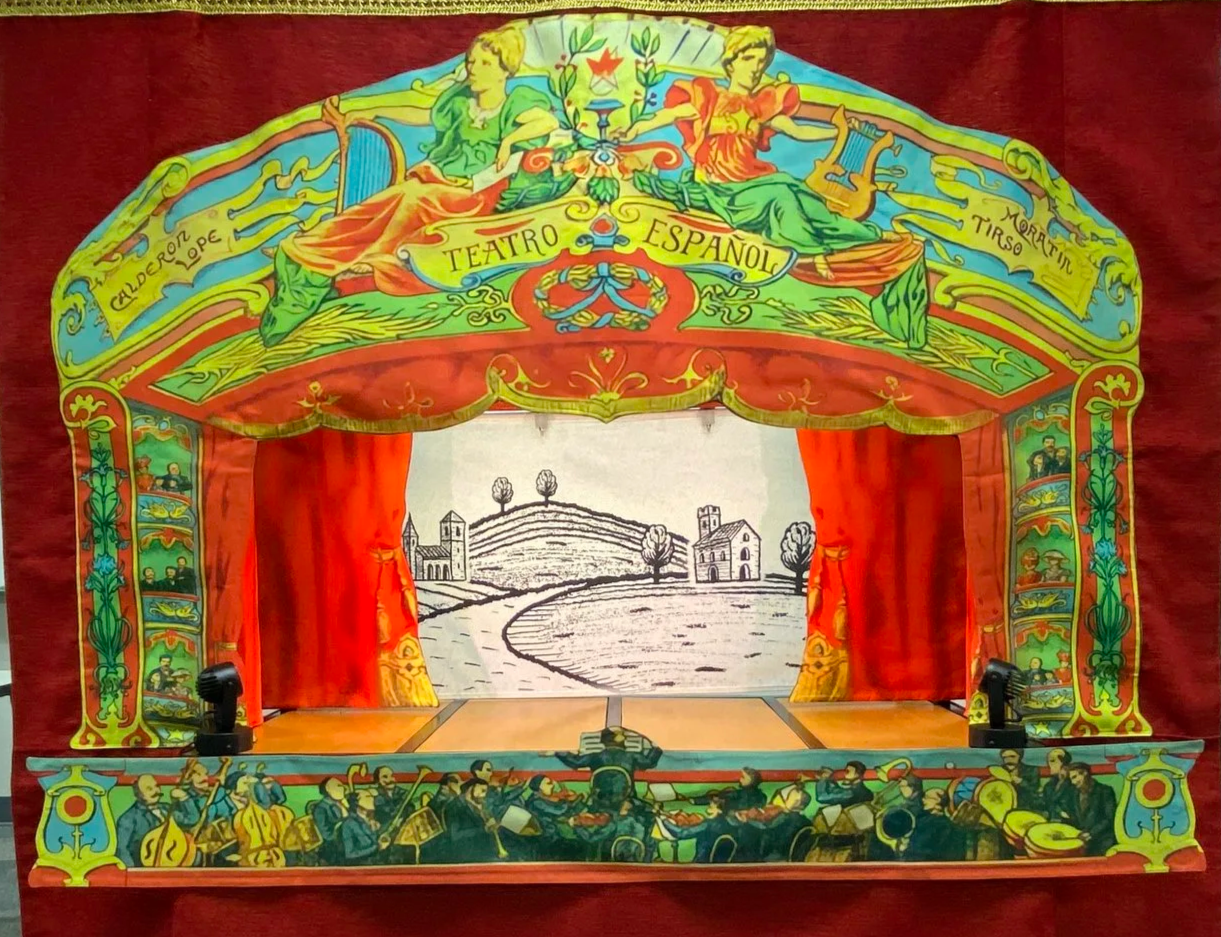
The GRAND Performance
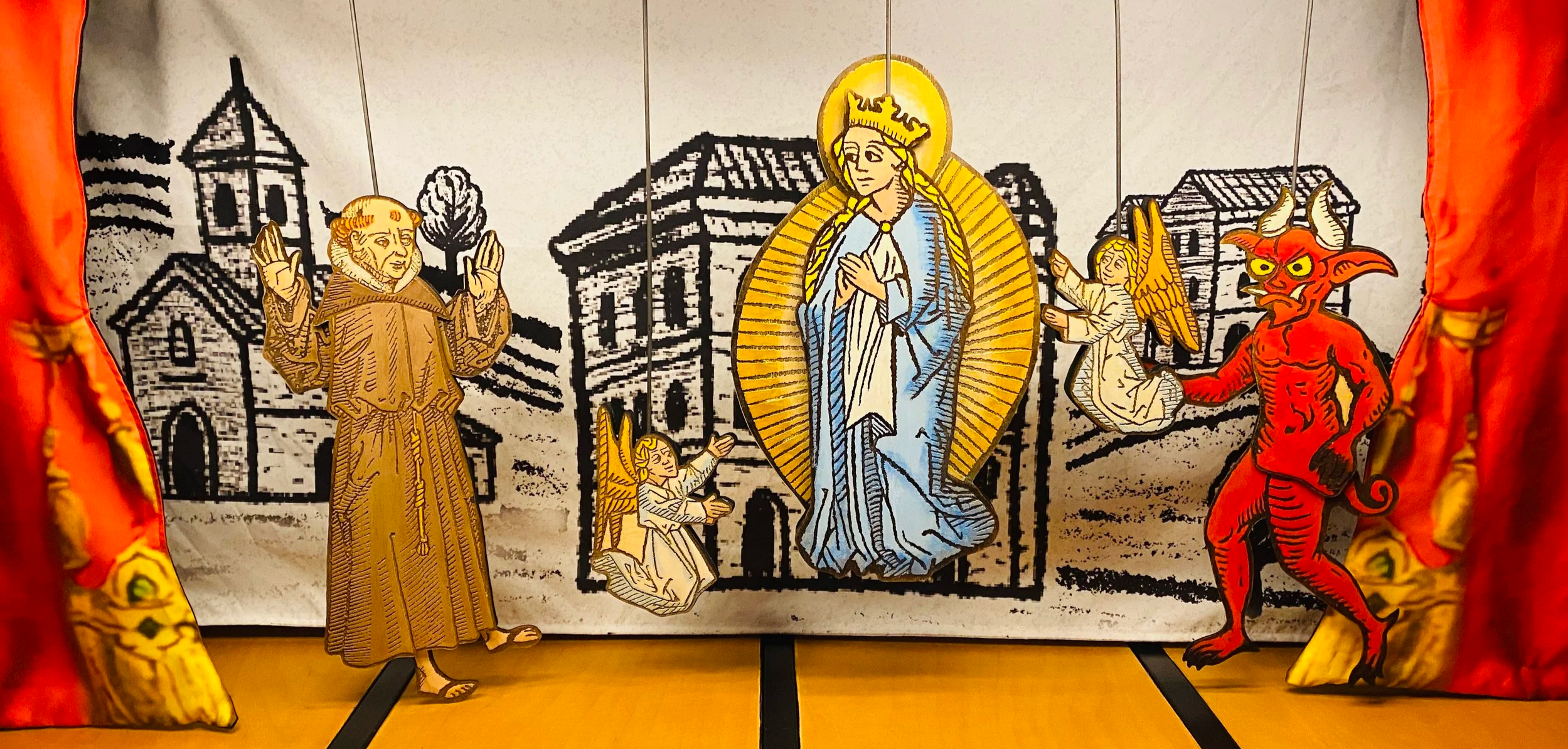
With the curtain raised, the stage features the look and depth of a miniature opera house, with adjustable side curtains for masking and a scenic backdrop.
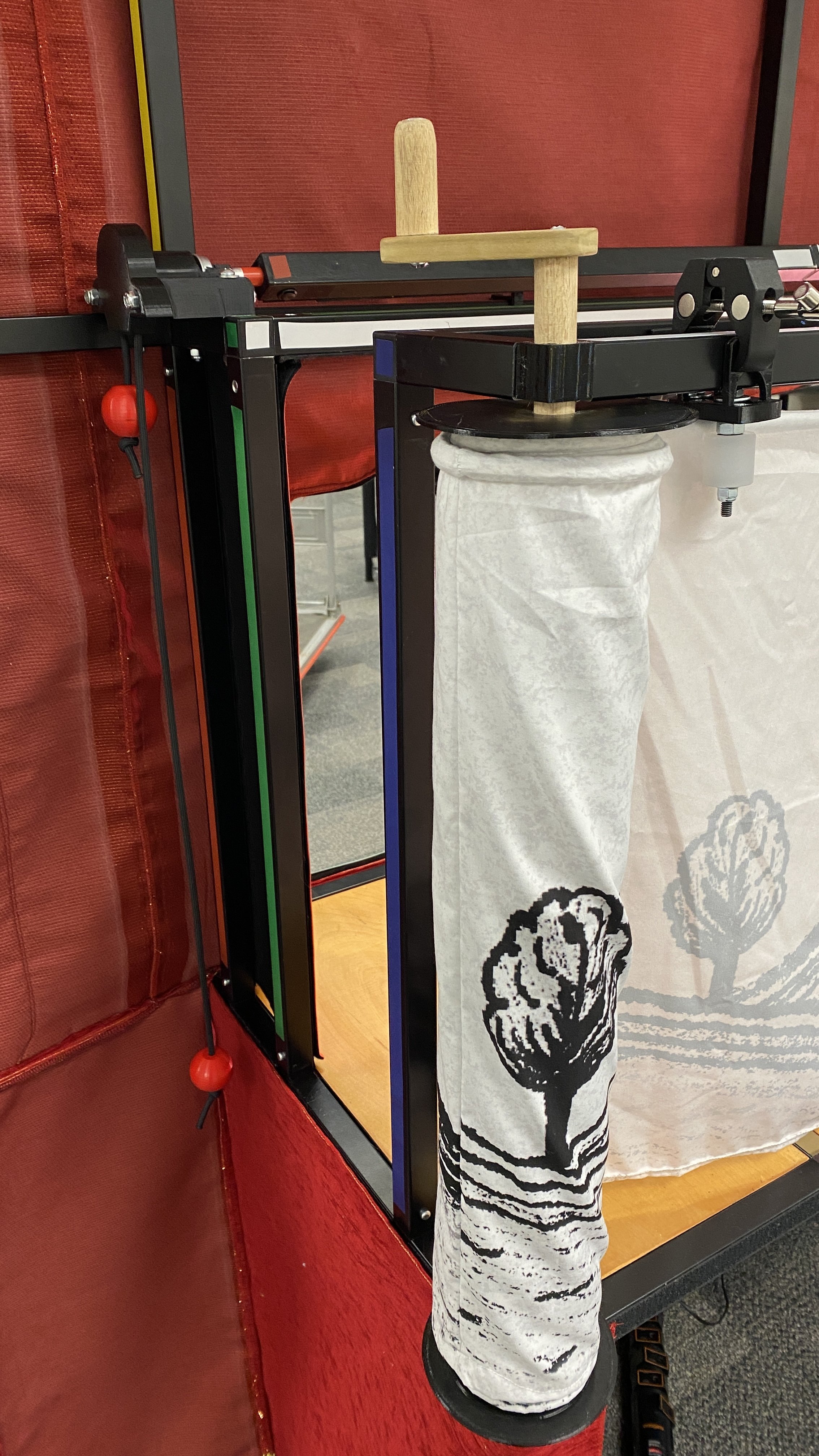
Scenic “Crankie”
The scenery used in our stage can accommodate two different styles. Individual scenic panels can be raised and lowered to create a visual effect similar to what you might see in a full-sized theater, but the scenery can also be advanced using a scrolling method commonly known in the puppetry world as a “crankie.” By turning the crank the scenery unrolls from one side of the stage to the other. Our crankie is quite a bit larger than usual, at nearly four feet wide and two feet tall!
On the Other Hand…
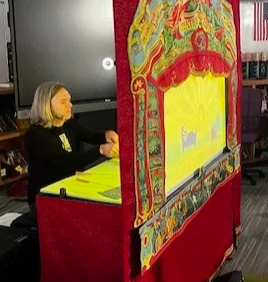
The modular capabilities of the stage means the opening can also be reconfigured with a screen to accommodate shadow puppets like those frequently used in Dragoncillo shows.
Make it stand out
In this configuration, the stage floor becomes a foam-covered table where multiple puppets can await their entrance or be propped up against the screen, allowing a single performer to operate multiple characters in a given show—like this one, during a performance of Alarm Cluck.

The LITTLE stage: TEATRINO
This miniature shadow puppet theater was built with support from a Grand Valley State University Sandbox Learning Innovation grant. Inspired by medieval reliquaries, each side of the box depicts scenes and symbols taken from woodcuts and was designed to look like a centuries-old trunk of mysteries carried from town-to-town on backs and in wagons by generations of puppeteers, magicians, and maybe witches!
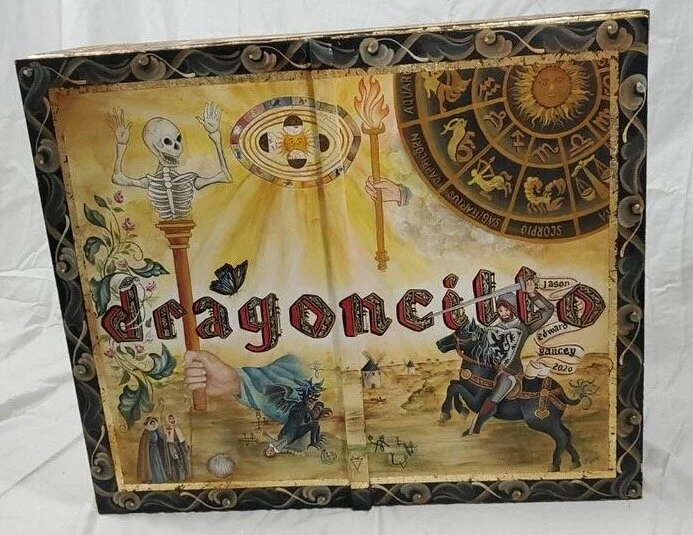
Box of shadows
With all the doors closed, the stage measures 22 inches wide, 18 inches tall, and 7 inches deep. Fully opened, it measures 44 inches wide, 18 inches tall, and 16 inches deep.

Simplicity and style
With just seconds needed to set-up the stage, a compact LED lamp—mounted to the upper panel—provides all the backlighting for the show and features 12 different colors that puppeteers can operate by remote control.

Form to compliment function
This unique set-up not only fits inside a suitcase for travel, it offers an intimate playing space for up to two puppeteers using puppets that can be propped in place on the screen when not in use.

Every hour, a labor of love.
See how the Teatrino was designed and built by Jason Yancey, and painted by award-winning artist, Jan Yancey.

The HAND puppet stage
This one-of-a-kind puppet stage, designed by Jason Yancey, breaks down to fit inside a wheeled traveling trunk, and sets up in 20 minutes, providing a full theatrical experience for puppet shows big and small. Although typically used with hand puppets, it can also accommodate both marionettes and shadow puppets.

Quick-change scenery
Using custom-printed backdrops that function like curtains and are both light weight and see-through, the scenery can be changed from one location to another in the blink of an eye!

Beautiful backstage
With multiple features like layered prop tables, custom lighting, and full access to audio equipment, the backstage area places everything a puppeteer could need at arm’s length.

See it in action!
See how undergraduate students at Grand Valley State University use this stage to perform original Spanish-language puppet shows at immersion elementary schools in the Grand Rapids area.